
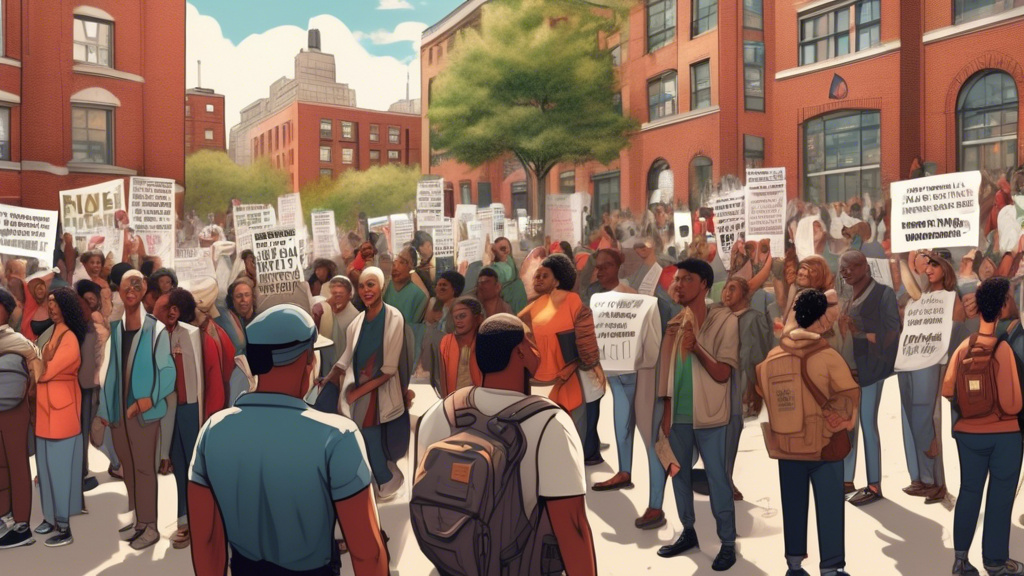

Overview of the Arrests at Pro-Palestinian University Demonstrations in NYC
In recent demonstrations supporting Palestine at two universities in New York City, a striking revelation has emerged from NPR’s latest reports. According to law enforcement data, nearly half of those arrested at these events were not students, raising questions about the dynamics and nature of the protests. This news sheds light on the complexity of university protests and the broad spectrum of participants involved in such political and social movements.
The Nature of the Protests
The protests were organized in response to recent developments in the Israeli-Palestinian conflict, aiming to draw attention to and gain support for Palestinian causes. As is common in university settings, the demonstrations were expected to attract a student body keen on expressing solidarity and advocating for international human rights. However, the involvement of significant numbers of non-students introduces additional layers to the understanding of these protests.
Analysis of Arrest Records
Authorities indicated that a varied mix of individuals, both students and non-students, participated in the demonstrations that took place on the campuses. The arrest records reveal that exactly fifty percent of those detained during these incidents were not affiliated with the universities. This statistic suggests a higher level of community and external involvement in campus activities than previously understood.
Implications of Non-Student Participation
The high percentage of non-student arrests could influence public and institutional perception of the protests. There are several implications to consider:
- Shift in Narrative: With a significant number of non-students involved, the focus may shift from student-led activism to broader community or external agitation. This could potentially alter the narrative around the intentions and nature of the protests.
- Security Concerns: Increased participation from individuals not directly affiliated with the universities raises security concerns. Institutions might have to reconsider their strategies for managing protests and ensuring campus safety.
- Policing and Policies: The involvement of non-students also impacts policing strategies and the enforcement of campus policies regarding demonstrations and public gatherings.
Response from University Administrations
Following the revelations from the arrest records, university administrators are reassessing their approach to handling demonstrations. The aim is to craft policies that accommodate peaceful protest while maintaining safety and order on campus. The universities are also considering ways to better identify and manage the involvement of non-students in future demonstrations.
Public and Community Reactions
The news of non-student involvement has elicited mixed reactions from the public and the academic community. Some view the broad-based support as a positive endorsement of the student movements, while others express concern about the potential for unrest and the dilution of student voices in their own advocacy efforts. Community leaders and local politicians are also paying closer attention to these developments, acknowledging the need for dialogue and perhaps mediation to address the underlying issues effectively.
Conclusion
The involvement of a significant number of non-students in the NYC university pro-Palestinian demonstrations highlights the interconnectedness of university issues with wider community concerns. As the situation evolves, it will be crucial for all stakeholders—students, university authorities, community leaders, and law enforcement—to engage in open communication and thoughtful consideration of the varied interests and safety concerns involved. This approach will not only address immediate concerns but also foster a healthier environment for civic engagement and protest in the future.
In the wake of these findings by NPR, the true character and impact of university protests may be seen in a new light, prompting a reevaluation of how these important civic activities are conducted and perceived in the broader societal context.


