
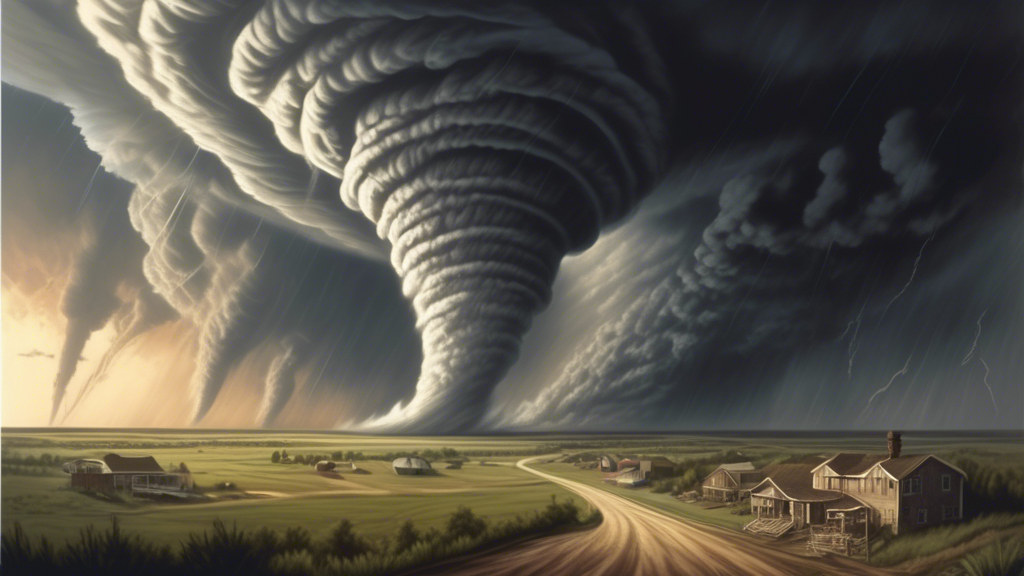

Understanding Tornadoes: A Unique Meteorological Phenomenon
Tornadoes, one of nature’s most violent and erratic weather phenomena, have long intrigued and terrified those who witness their destructive power. While tornadoes can occur on every continent except Antarctica, the United States experiences more tornadoes than any other nation. This article delves into the reasons behind this phenomenon, exploring the geographical, meteorological, and sociocultural factors that contribute to the United States’ predisposition to these devastating storms.
Geographical Factors
The Unique Topography of Tornado Alley
The central United States, often referred to as Tornado Alley, comprises states like Texas, Oklahoma, Kansas, and Nebraska. This region is characterized by a unique topography that sets the stage for frequent tornado formation. Its location in the interior of the continent, away from the moderating influence of large bodies of water, allows for extreme temperature contrasts that are a key ingredient for tornado development.
Convergence of Air Masses
The convergence of different air masses in Tornado Alley creates ideal conditions for tornadoes. Warm, moist air from the Gulf of Mexico collides with cool, dry air from the Rockies and cold, dense air from Canada. This collision leads to the formation of supercell thunderstorms, which are often capable of producing tornadoes. The flat terrain of the Great Plains facilitates the unimpeded movement and interaction of these air masses, increasing the likelihood of tornado formation.
Meteorological Conditions
The Role of Jet Streams
Jet streams are fast-flowing air currents in the upper atmosphere that play a crucial role in weather patterns. The United States is frequently influenced by the polar jet stream, which brings turbulent weather to the mid-latitudes. The interaction between the jet stream and ground-level conditions often leads to the development of severe thunderstorms, which can spawn tornadoes.
Seasonal Variations
Tornadoes can occur at any time of year, but they are most common in the spring and early summer. This seasonal variability is due to the transition between cooler winter temperatures and the warmer temperatures of summer. During this period, the stark temperature contrasts and increased atmospheric instability provide the perfect conditions for tornado development. Additionally, the position and strength of the jet stream are often most favorable for severe weather during these months.
Sociocultural Factors
Population Density and Reporting
The United States has a high population density in many of the regions prone to tornadoes. This density ensures that tornadoes are more likely to be observed, reported, and recorded than in less populated areas of the world. The extensive network of storm chasers, meteorologists, and media also plays a significant role in ensuring that tornadoes are well-documented in the United States, contributing to the perception that the nation experiences more tornadoes.
Advanced Meteorological Infrastructure
The United States boasts some of the most advanced meteorological infrastructure in the world. Organizations such as the National Weather Service (NWS) and the Storm Prediction Center (SPC) are dedicated to monitoring and forecasting severe weather. The widespread availability of weather radar, satellite technology, and early warning systems allows for accurate tracking and reporting of tornadoes. This infrastructure not only helps in mitigating the impact of tornadoes but also ensures that more tornadoes are detected and recorded.
Conclusion
The United States experiences more tornadoes than any other nation due to a combination of unique geographical and meteorological conditions, coupled with advanced reporting and monitoring infrastructure. The specific topography of Tornado Alley, the convergence of diverse air masses, and the influence of jet streams create an environment exceptionally conducive to tornado formation. Additionally, the high population density and sophisticated meteorological systems ensure that tornadoes are consistently observed and documented. Understanding these factors is key to preparing for and mitigating the risks associated with these powerful and unpredictable storms.


