
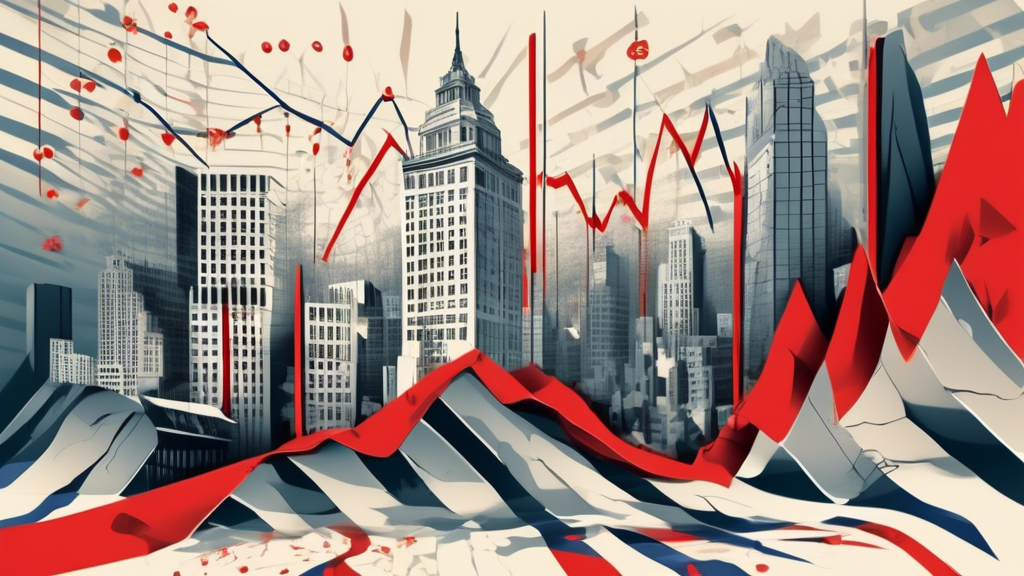

Political Instability and Market Trends
Political instability refers to the uncertainty and unpredictability that arises in a country due to governmental changes, social unrest, civil unrest, or conflicts. These turbulent conditions invariably impact the economic environment, influencing market trends and investor sentiment. This article explores the intricate relationship between political instability and market trends, highlighting key factors, historical perspectives, and implications for investors.
Understanding Political Instability
Political instability can manifest in various forms, each with its unique triggers and consequences:
- Government Changes: The frequent change of administrations, abrupt policy shifts, or the fall of governments can create uncertainty. These changes can result from elections, coups, or transitions due to health or legal issues.
- Social Unrest: Protests, strikes, and other forms of civil disobedience can destabilize regions, causing disruptions in normal economic activities and creating an unfavorable environment for business operations.
- Geopolitical Conflicts: Military conflicts, border disputes, and international sanctions can have far-reaching implications for market stability and economic predictability.
The Mechanics of Market Reactions
Markets are inherently sensitive to political stability as they thrive on predictability and measured risks. The relationship between political instability and market trends can be illustrated through several key mechanisms:
Investor Sentiment
Political instability typically leads to uncertainty, which can diminish investor confidence. When investors perceive a higher risk, they may opt for a ‘flight to safety’ by moving their capital to more stable environments or secure assets such as gold and government bonds. This shift can result in market volatility and reduced investments in affected regions.
Currency Fluctuations
Political instability often exerts pressure on a nation’s currency. Insecure political environments can lead to depreciations as investors seek the stability of stronger currencies. Currency depreciation can have inflationary effects, further unsettling markets and decreasing consumer spending power.
Stock Market Volatility
Equity markets tend to react swiftly to political events. For instance, announcements of uncertain political developments can induce sharp sell-offs, while positive resolutions may lead to sudden rallies. The volatile nature of stock markets amidst political unrest can pose significant risks for traders and long-term investors.
Foreign Direct Investment (FDI)
Political instability can deter Foreign Direct Investment (FDI), as investors prefer environments that offer stable regulations and predictable returns. Reduced FDI can hamper economic growth, push up unemployment rates, and constrict domestic market development.
Historical Perspectives
Several historical instances illustrate the profound impact of political instability on market trends:
The 2008 Financial Crisis
The 2008 financial crisis was exacerbated by political indecision and debates about bailout packages. Uncertainty about government interventions led to extreme market volatility and a steep decline in investor confidence, contributing to a prolonged economic downturn.
Brexit Referendum
The 2016 Brexit referendum created significant uncertainty regarding the future of the United Kingdom’s trade relations. The pound sterling experienced sharp fluctuations, and the stock markets saw erratic behavior as businesses and investors grappled with Brexit’s ramifications.
The Arab Spring
The Arab Spring, beginning in late 2010, caused massive upheaval across the Middle East and North Africa. The political instability led to a substantial economic downturn in affected regions, driving away foreign investments and leading to market contraction.
Implications for Investors
In light of the volatile interplay between political instability and market trends, investors must adopt strategies to mitigate risks and capitalize on potential opportunities:
Diversification
Diversifying investments across different geographies, industries, and asset classes can help mitigate the risks associated with political instability in any one region.
Monitoring Political Developments
Staying informed about political developments and maintaining a proactive approach to adjusting portfolios can help investors navigate through periods of instability.
Safe-Haven Assets
Investing in safe-haven assets such as gold, government bonds, and stable currencies can provide a buffer against market volatility during tumultuous political times.
Conclusion
Political instability remains a significant determinant of market trends, influencing investor sentiment, currency values, stock market behavior, and foreign direct investment. Understanding the underlying mechanisms and historical context can help investors better navigate the complexities introduced by political turbulence, ensuring more resilient and informed investment decisions.


