
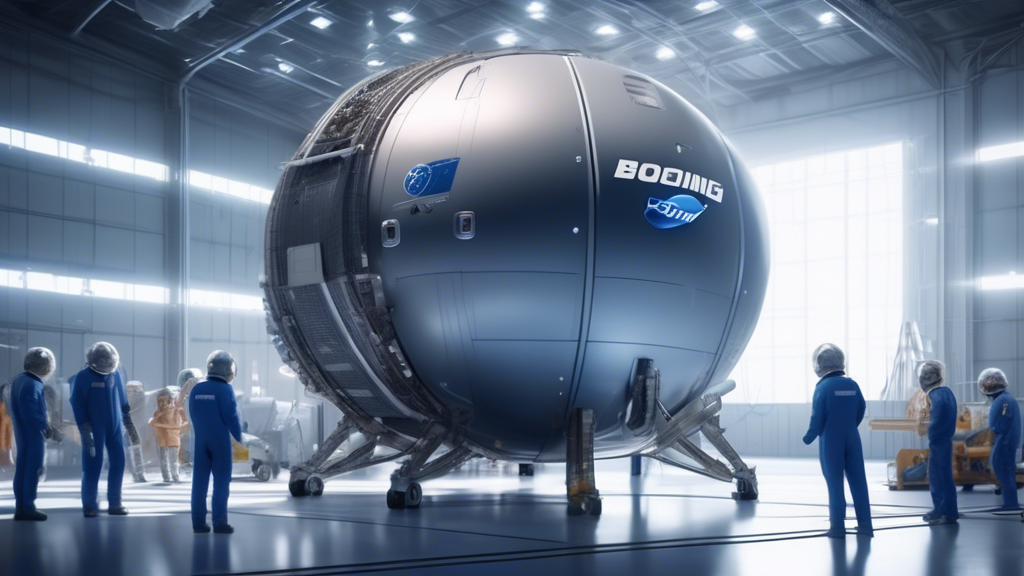

Overview of Recent Issues with Boeing’s Starliner
The aerospace community has experienced another setback as Boeing’s Starliner spacecraft faces additional delays due to helium leakage, according to recent reports from NASA. This delay impacts the much-anticipated Crew Flight Test (CFT), which is integral to NASA’s Commercial Crew Program aimed at facilitating human spaceflight capabilities and reducing reliance on Russian Soyuz spacecraft.
Understanding the Helium Leakage Issue
Helium is utilized within spacecraft systems primarily for pressurization of fuel tanks. The leakage was detected during routine prelaunch checks, raising concerns about spacecraft safety and operational integrity. NASA and Boeing have prioritized resolving the issue to ensure the utmost safety for flight crew members, although this means pushing the launch schedule further back than initially planned.
Technical Details of the Leakage
The specific component affected involves the Starliner’s propulsion system, where helium is used to maintain pressure in the fuel tanks which drive the spacecraft’s maneuvering engines. Anomalies in pressure readings indicated a possible leak, which subsequent investigations confirmed. The complexity of the propulsion system means that pinpointing and repairing such leaks can be time-consuming and technically challenging, necessitating extensive tests and validation before declaring the spacecraft fit for the manned mission.
Implications of the Delay
The delay caused by the helium leak adds to a series of previous setbacks for the Starliner program, which includes software glitches and valve malfunctions in past uncrewed test flights. This accumulation of issues not only affects timelines but also financial and strategic planning for Boeing and NASA’s future space endeavors. Every delay in testing increases costs and extends the period before Boeing can commence commercial operations, impacting potential revenue and competitive positioning in the burgeoning space industry.
Response from Boeing and NASA
In response to the discovery of the helium leak, both Boeing and NASA have communicated their commitment to safety and mission assurance. A detailed investigation into the causes of the leak is underway, and both parties are focused on a thorough review and rectification process to prevent similar issues in future. Furthermore, NASA has expressed its ongoing support for Boeing, affirming the importance of the Starliner to the U.S. space program and continued international collaboration in space exploration.
Impact on Astronauts and Future Missions
The additional delay has implications not only for the technical teams involved but also for the astronauts scheduled to fly in the Starliner. Training schedules, psychological readiness, and logistical arrangements must be reassessed and reconfigured to accommodate the new timeline. Moreover, as the International Space Station (ISS) relies on regular missions to rotate crew and resupply essential provisions, any delay in crewed flights can have ripple effects on broader mission planning and international commitments.
Expected Timeframe for Resolution and Moving Forward
While the exact duration of the delay will depend on the outcomes of the ongoing technical evaluations, Boeing aims to address the helium leakage issue as swiftly as possible. NASA and Boeing are scheduled to provide updates as the situation develops, including revised timelines for the CFT. Stakeholders remain hopeful that this setback is a minor detour in the path to establishing a reliable and regular American-led crewed spaceflight service.
Conclusion
Despite the challenges presented by this latest issue with helium leakage, the commitment to the Starliner program remains strong among all involved parties. Solving these technical issues will provide valuable insights that will enhance the safety and reliability of future crewed space missions. As Boeing and NASA navigate these hurdles, the global aerospace community watches closely, anticipating the successful culmination of this test flight and subsequent operational missions.


