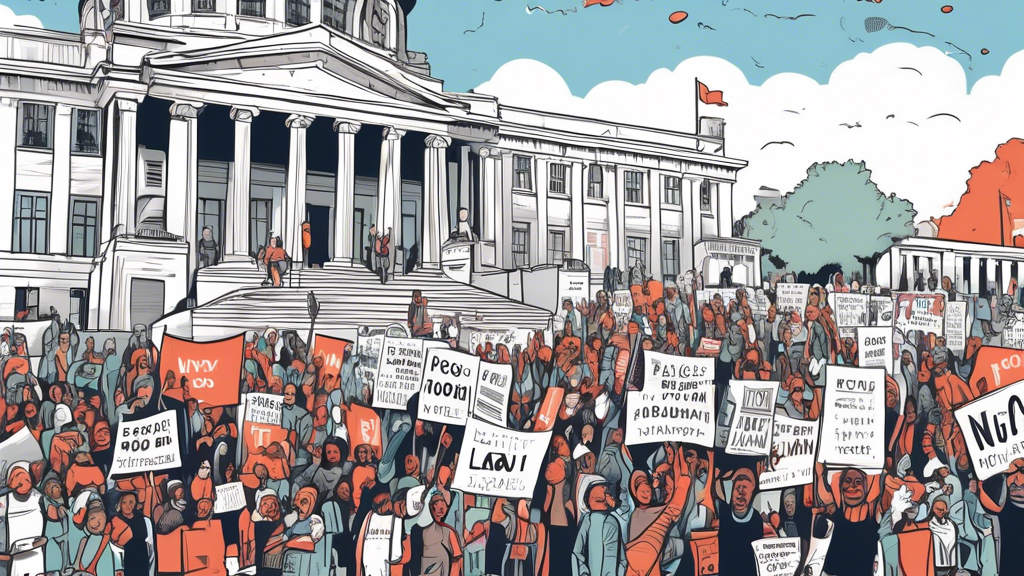

Georgia’s Legislative Decision on Foreign Agent Regulation
In a move that has sparked controversy and widespread demonstrations, Georgia’s legislature has recently adopted a foreign agent regulation, which opponents argue threatens civil liberties and aligns with tactics used by authoritarian governments. This law requires any organization receiving over 20% of its funding from foreign sources to register as a foreign agent, drawing criticism from various sectors within the nation.
Background of the Legislation
The foreign agent law adopted by Georgia mirrors similar legislation enforced in countries like Russia, where it has been used to suppress dissent and curb the activities of non-governmental organizations (NGOs), critics, and independent media. Proponents of the Georgian law argue that it is aimed at increasing transparency and preventing foreign interference in domestic affairs. However, critics argue that the law’s broad scope and vague terms could be exploited to stifle opposition and restrict the activities of organizations that are crucial for a healthy democracy, such as advocacy groups and media outlets.
Public Response and Protests
The reaction to the adoption of the foreign agent regulation was immediate and intense. Thousands of citizens took to the streets in protests that spanned several days. These demonstrations, largely peaceful, have shown the strong opposition among the Georgian public towards what they perceive as an encroachment on their democratic freedoms. Protesters have argued that the law not only undermines Georgia’s democratic institutions but also its aspirations for closer integration with Western countries, particularly the European Union and NATO.
International Reaction
The international community has also voiced its concerns regarding Georgia’s new foreign agent regulation. Entities such as the European Union and the United States have expressed disapproval, suggesting that the law could hinder Georgia’s path towards European integration and affect bilateral relations. International human rights organizations have echoed these sentiments, warning that the legislation poses a significant threat to freedom of speech and civil society in Georgia.
Implications for Civil Society and Media
The potential implications of the foreign agent law for NGOs, civil society groups, and independent media in Georgia are profound. By labeling these entities as foreign agents, the law could tarnish their reputation, reduce their influence, and jeopardize their operations. This could lead to a decrease in funding and support, thereby diminishing their ability to function effectively and independently. There is also a fear that the law will lead to increased governmental oversight and control, further constricting the space for critical voices and dissent within the country.
Looking Ahead
As Georgia grapples with the ramifications of this divisive law, the future of its democratic development appears uncertain. The strong public backlash and international criticism may prompt a re-evaluation of the law. However, as it stands, the legislation marks a significant moment in Georgia’s political landscape, with potential long-term consequences for its democratic integrity and international relations.
In conclusion, while the Georgian legislature’s adoption of the foreign agent regulation aims to enhance transparency and protect national sovereignty, the widespread disapproval at home and abroad showcases the complexities and challenges of balancing national security concerns with the preservation of democratic values.