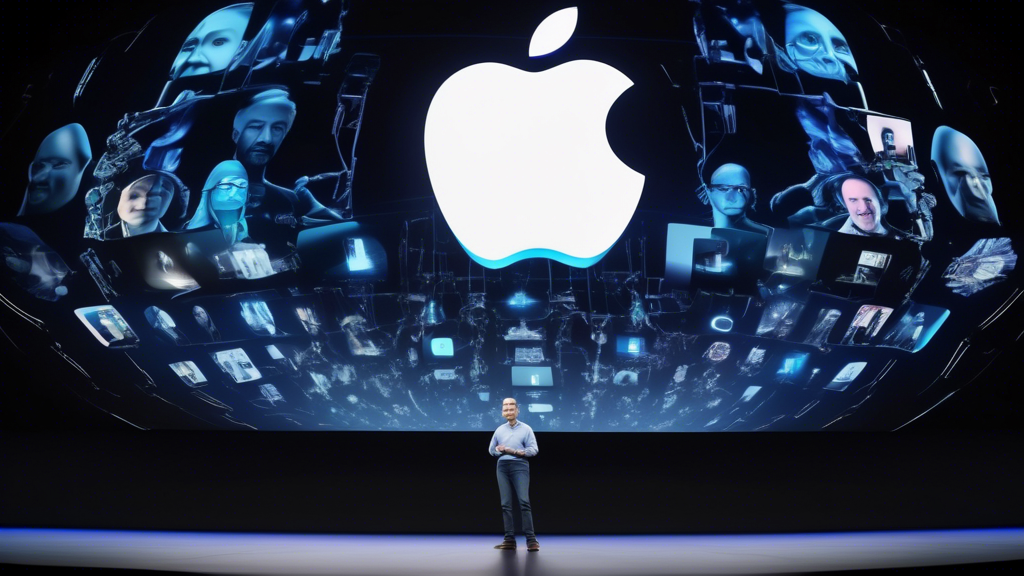

Apple Joins AI Competition at WWDC, Aiming to Surpass Early Leaders
At their recent Worldwide Developers Conference (WWDC), Apple announced a significant push into the burgeoning artificial intelligence (AI) field, signaling their intent to surpass early leaders in the industry. The event, annually hosted to showcase Apple’s latest software and technology developments, served as a platform for unveiling a suite of AI-driven innovations.
New AI Capabilities in Apple’s Ecosystem
One of the standout announcements was the integration of enhanced AI features across Apple’s ecosystem. These include improved machine learning capabilities and more intelligent personal assistant features driven by advanced AI algorithms. The tech giant is betting heavily on AI to augment the user experience across its devices, from iPhones to MacBooks to the Apple Watch.
Apple’s Siri, once a groundbreaking feature, has faced increased competition from other AI assistants like Amazon’s Alexa and Google Assistant. In response, Apple revealed a major upgrade to Siri, promising faster response times, greater contextual understanding, and an expanded range of functionalities that aim to outshine those of its competitors.
AI Development Tools for Developers
Acknowledging the importance of developer engagement in driving AI innovation, Apple introduced new AI development tools and frameworks. The updated Core ML, Apple’s machine learning framework, now offers greater performance improvements and new APIs that make it easier for developers to infuse AI capabilities into their apps.
Additionally, Apple rolled out Create ML, a more user-friendly tool designed to facilitate machine learning model training without in-depth expertise. By lowering the barrier to entry for AI development, Apple is fostering a more robust ecosystem of AI-powered applications.
Privacy and Ethical Considerations
Apple also made it clear that their AI initiatives would be anchored by the company’s steadfast commitment to user privacy. Throughout the keynote, Apple executives emphasized data security and responsible AI practices. They highlighted how AI processing would predominantly occur on-device rather than in the cloud, minimizing data exposure.
In response to growing concerns about the ethical implications of AI, Apple outlined its principles for ethical AI development, focusing on transparency, inclusiveness, and minimizing bias. These measures aim to build user trust and ensure that AI advancements benefit everyone equitably.
Competition in a Crowded AI Market
With these announcements, Apple signals its intent to catch up to, and eventually, outperform established AI leaders. Companies like Google and Microsoft, who have both made significant strides in AI development, now face a rejuvenated competitor committed to pushing the boundaries of the technology.
As the AI race heats up, the introduction of Apple’s new AI functionalities and developer tools is sure to generate excitement among consumers and innovation within the developer community. Apple’s strong emphasis on user privacy and ethical AI practices could also set new industry standards, prompting competitors to follow suit.
Conclusion
Apple’s entry into the competitive AI landscape marks an ambitious step forward at WWDC. With enhanced AI-powered features, new development tools, and a principled approach to privacy and ethics, Apple is poised to make significant waves in the industry. As they aim to surpass early leaders, all eyes will be on how these developments unfold and influence the broader tech landscape.