
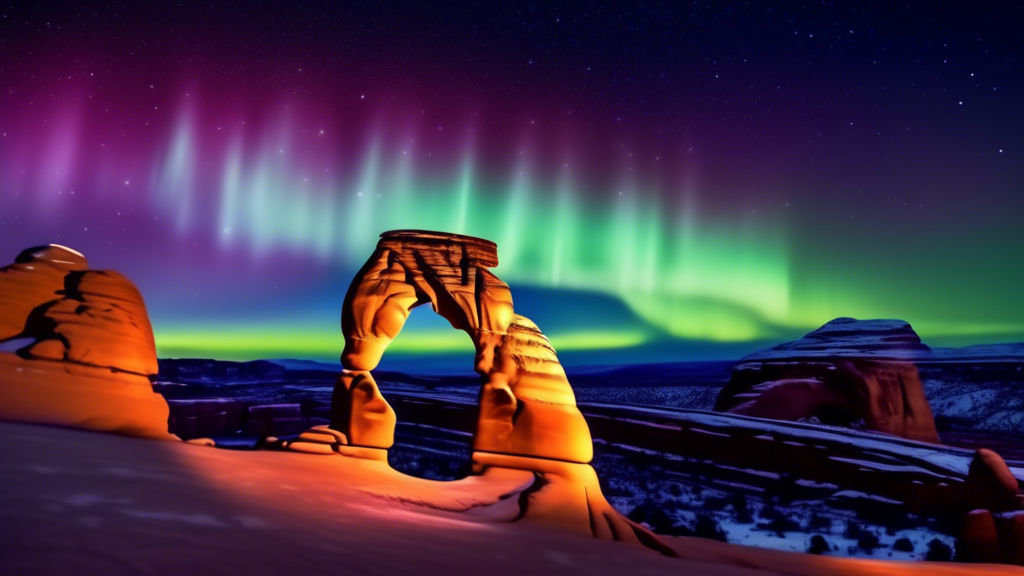

Aurora Borealis Expected to Make Another Appearance in Utah Skies
Utah residents and visitors are in for a celestial treat as the Aurora Borealis, also known as the Northern Lights, is expected to grace the night skies once again. This spectacular natural phenomenon is not commonly seen in the lower latitudes of Utah, making the upcoming event a particularly special opportunity for sky watchers in the region.
What Causes the Aurora Borealis?
The Aurora Borealis is a result of interactions between the Earth’s atmosphere and charged particles from the sun. These particles are carried towards Earth by the solar wind and are mostly deflected by Earth’s magnetic field. However, the magnetic field is weaker at the poles, allowing some particles to enter the atmosphere and collide with gas atoms, causing the mesmerizing light displays.
Why Is It Visible in Utah?
Typically, the Northern Lights are best observed at higher latitudes in locations like Alaska and northern Canada. However, certain conditions, such as a strong solar wind or a severe geomagnetic storm, can push the aurora further south, making it visible in areas like Utah. This rarity adds to the excitement and uniqueness of the event for many Utah residents.
When and Where to Watch
The upcoming appearance of the Aurora Borealis in Utah is forecasted to occur over the next few days. The best time to view the lights is usually between 10 p.m. and 2 a.m., when the skies are darkest. Light pollution can hinder the visibility of the aurora, so it is advisable to head to locations away from city lights. Areas with a clear view of the northern horizon will provide the best vistas, as the aurora typically appears to originate from the north.
Potential viewing spots in Utah could include Antelope Island, Canyonlands National Park, and Bryce Canyon National Park, all of which offer dark skies away from significant urban light pollution.
Photographing the Aurora
Capturing the Northern Lights in a photograph can be a rewarding experience. To get the best results, use a DSLR camera with manual mode capability. Set your camera on a tripod and use a long exposure to allow more light to enter the lens. Wide-angle lenses work best, capturing the grandeur of the lights against the expansive night sky. Adjust the ISO, aperture, and shutter speed to accommodate the level of light available, and experiment with different settings to capture the most detailed and vibrant images.
What Can Observers Expect?
Observers can expect to see an array of colors, though green is typically the most dominant in auroras. Sometimes, if conditions are right, pink, purples, and reds may also be visible. The lights can appear as static bands of color or as dynamically shifting curtains that change shape and intensity.
Conclusion
The appearance of the Northern Lights is a rare and mesmerizing event for Utah’s night sky observers. As solar activity continues to play a significant role in the visibility of the auroras, enthusiasts should stay informed about solar forecasts to take advantage of these extraordinary viewing opportunities. Whether you are an avid astronomer, a photographer, or simply someone who appreciates natural wonders, the Aurora Borealis in Utah promises to be a breathtaking spectacle.


